Why creative tool rollouts fail—and what Sinch and Webflow learned fixing it
Enterprise creative teams are running into the same wall from two different directions: Some are trying to consolidate a fragmented brand estate so they have something coherent to scale from. Others already have the brand and can't produce video at the volume the organization needs.
For both, the bottleneck is the same: the creative team can't do it all, and the tools alone won't fix it.
Session 2 of the Video First Summit brought together Gwen Lafage (VP of Marketing at Sinch), Dmitry Shamis (co-founder of OhSnap! and former head of global brand and creative at HubSpot), and Marissa Kraines (VP of Brand Marketing at Webflow) to talk through what that process looks like in practice—and where most teams get it wrong.
The consolidation challenge: what Sinch's 22-brand problem forced them to solve
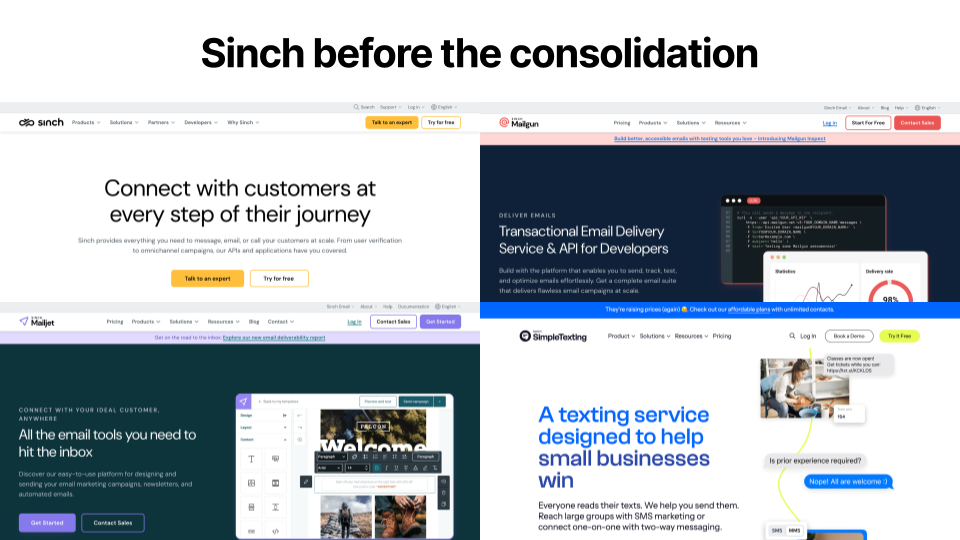
When Gwen Lafage came to Sinch, the company had 22 separate brands built through years of acquisition. Each had its own identity and its own assets. The creative team was serving all of them, which meant no coherent system, no scale, and no ability to build anything that traveled across the organization.
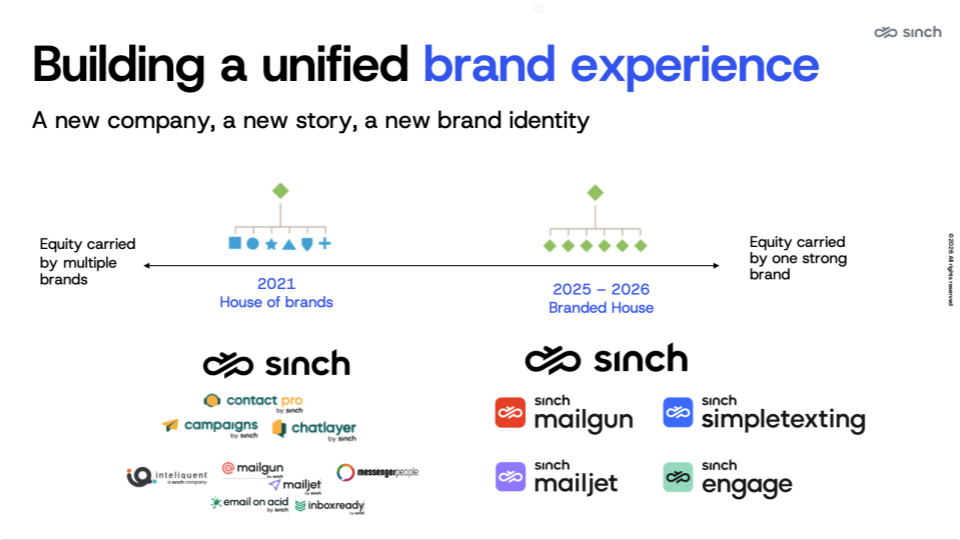
Lafage and Shamis's firm, OhSnap!, worked to consolidate those 22 brands into 6—building a brand system that gave each sub-brand a distinct personality while still belonging to a coherent whole.
"We needed to create a branded house," Lafage said. "A strong Sinch brand with guidelines, assets, and principles all in place, and then a system for how all the sub-brands belong to it."
The consolidation wasn't just aesthetic. It was the prerequisite for everything that came after. You can't build self-serve templates if there's no single brand to template from.
What a self-serve creative program looks like—and which tools make it work
A self-serve creative program gives non-designers access to locked-down, on-brand templates so they can produce assets without touching the creative team's queue.
The architecture depends on separating who uses what: design teams work in the source-of-truth tool; everyone else works in a simplified layer built on top of it.
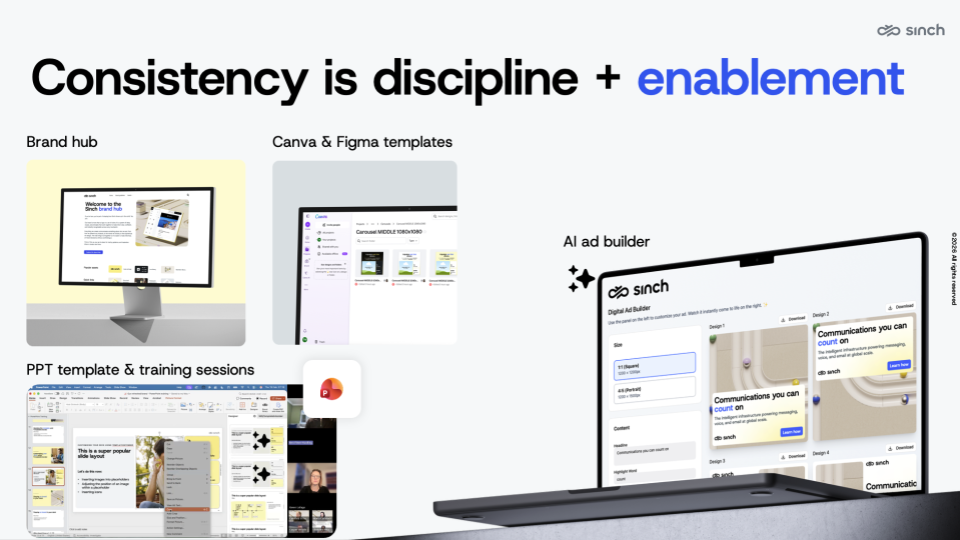
At Sinch, that came down to three tools with clear ownership:
- Figma stayed as the source of truth for the design team.
- Canva became the self-serve layer for non-designers—product marketers, regional teams, and sales reps who needed on-brand assets without a professional design tool.
- Frontify was added as a live brand hub, giving everyone a single place to access guidelines and assets.
Dmitry framed it this way: Canva is the final mile, not the entire marathon. "A lot of that marathon took place in Figma, let's be honest. But the final mile that allowed things to get out the door—especially for social and content teams putting things out on a day-to-day basis—that was the final mile that allowed them to stay on brand."
Getting the creative team on board required naming it that way explicitly: you still own 25 miles. It's that last mile that lets things go out the door without you being hands-on with every single thing.
Webflow's video problem: why the agency path and the in-house path both hit a ceiling
Marissa Kraines runs brand marketing at Webflow with a lean team whose bandwidth is deliberately reserved for high-end productions.
That left everyone else with two options: go without video, or use outside agencies. Neither worked at scale.
"Even with agencies, there's so much onboarding that needs to be done to make sure that they have the governance in place to be clearly on brand," Kraines said. "And we had different agencies that were doing different things."
The performance and growth teams were running completely static ads across every platform—no motion option—because the key players weren't available in-house. The pressure was coming from two directions: industry data showing video outperforms static everywhere, and internal demand to produce more without more resources.
The ceiling on the agency path is ultimately budget. The ceiling on the in-house path is capacity. Self-serve video—where the creative team retains governance while other teams produce within it—was the only model that resolved both.
"Having that self-service that Capsule provided, and still allowing our creative team to have control and ownership and governance, that's one of the only ways that you can actually make that happen."
The part every rollout underestimates: onboarding
Across all three panelists, the sharpest point of agreement was this: building the templates and publishing the guidelines is not the hard part. Getting people to actually use them is.
"We feel like we've done the guidelines, we've done the hard work of creating the brand, and then we have these beautiful assets, and then we're like, 'There you go, team. Just go and have fun,'" Lafage said.
"But that is something very important to put time and effort into: how we do the training, how we share with them how the systems work, and being there for them."
Shamis saw this pattern repeatedly on the agency side. Most clients push back on the education investment—they assume people will figure it out.
But the question isn't just how to use the tool. It's why you're using this tool, what you're using it for, and what you're not using it for. When those answers are unclear, teams revert and create workarounds, ultimately stalling the rollout.
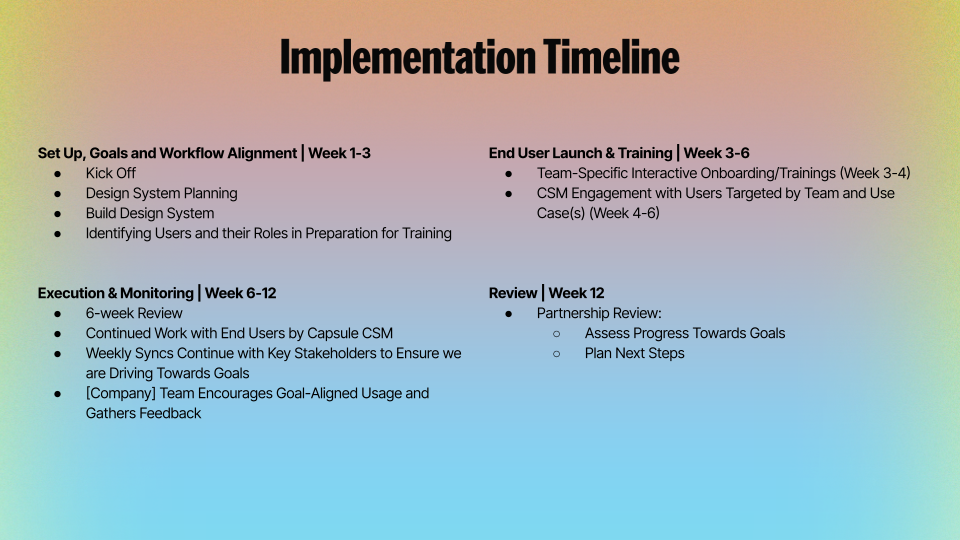
At Webflow, Kraines sequenced the Capsule rollout deliberately rather than opening it to the whole company at once:
- Social team — the hungriest users, already asking the video team for help. Starting here built early momentum and proof points.
- Product marketing — handling tier two and tier three launches, where the need for video was high and the brand stakes were clear.
- Sales — using video for outreach and customer education, furthest from the brand system but with strong use-case motivation.
How to drive creative tool adoption across large enterprise teams
Getting non-designers to adopt a new tool is one challenge. Getting the creative team to let them is another.
Marissa named what's actually at stake: creatives have owned their work end to end, often for their entire careers. A self-serve program asks them to hand that over to people who don't have the same skills or the same standards. That's a genuine fear, not a political one, and it needs to be addressed directly.
Dmitry's approach to addressing this: give creatives a specific list of what they'll get to work on once the onboarding is complete. Not a vague promise about more time—a named project, a real thing they can look forward to. "The gold at the end of the rainbow has to be specific. When you're trying to get people invested, it's a psychological point."
Marissa added the other side: make sure non-designers feel supported too. Early on, letting creatives review everything before it goes out isn't regression—it's trust-building. Creatives need to know their standards will hold. Non-designers need to know they won't get it wrong.
Another reframe that can be helpful for creatives: self-serve templates don't shrink a creative's work; they extend it.
It's an opportunity to actually get your work in front of more people. These templates now allow that creative’s work to be reused and redone in multiple ways and reach more people.
Session 2 of Capsule's Video First Summit was hosted by Natalie Taylor, head of marketing at Capsule. The Video First Summit brought together enterprise creative and marketing leaders to share what they're learning as video becomes a company-wide function.