Why your enterprise video team can't scale, according to Andrei Vexler
Most video leaders walk into a new org the same way: fired up to make the best content the company has ever seen. Andrei Vexler has done it multiple times: at agencies, Shopify, Ceridian, Dayforce, and now Kaseya as Sr. Director of Video Marketing.
But then he noticed the pattern.
"If I start the same way I have at every previous organization, I'm going to run into the exact same headaches."
So instead of thinking, I'm going to make the coolest stuff, he started asking, How do I show you how to make the coolest stuff?
We recently hosted Andrei to talk about this idea—going from video maker to video enabler—in a live event.
Here are the 5 key takeaways from that discussion, based on Andrei’s 16 years of video experience and leadership inside enterprise organizations.
The demand for video has outgrown what any one team can produce
Video used to be a once-a-quarter thing. You hired an agency, you made something polished, you put it out.
Now every team—sales, marketing, comms, product—has an insatiable appetite for it, and the cost and complexity of production has dropped enough that everyone thinks they can make it themselves. Which creates a very specific problem for creative teams.
"Making has a finite amount of impact. But enabling is exponential."
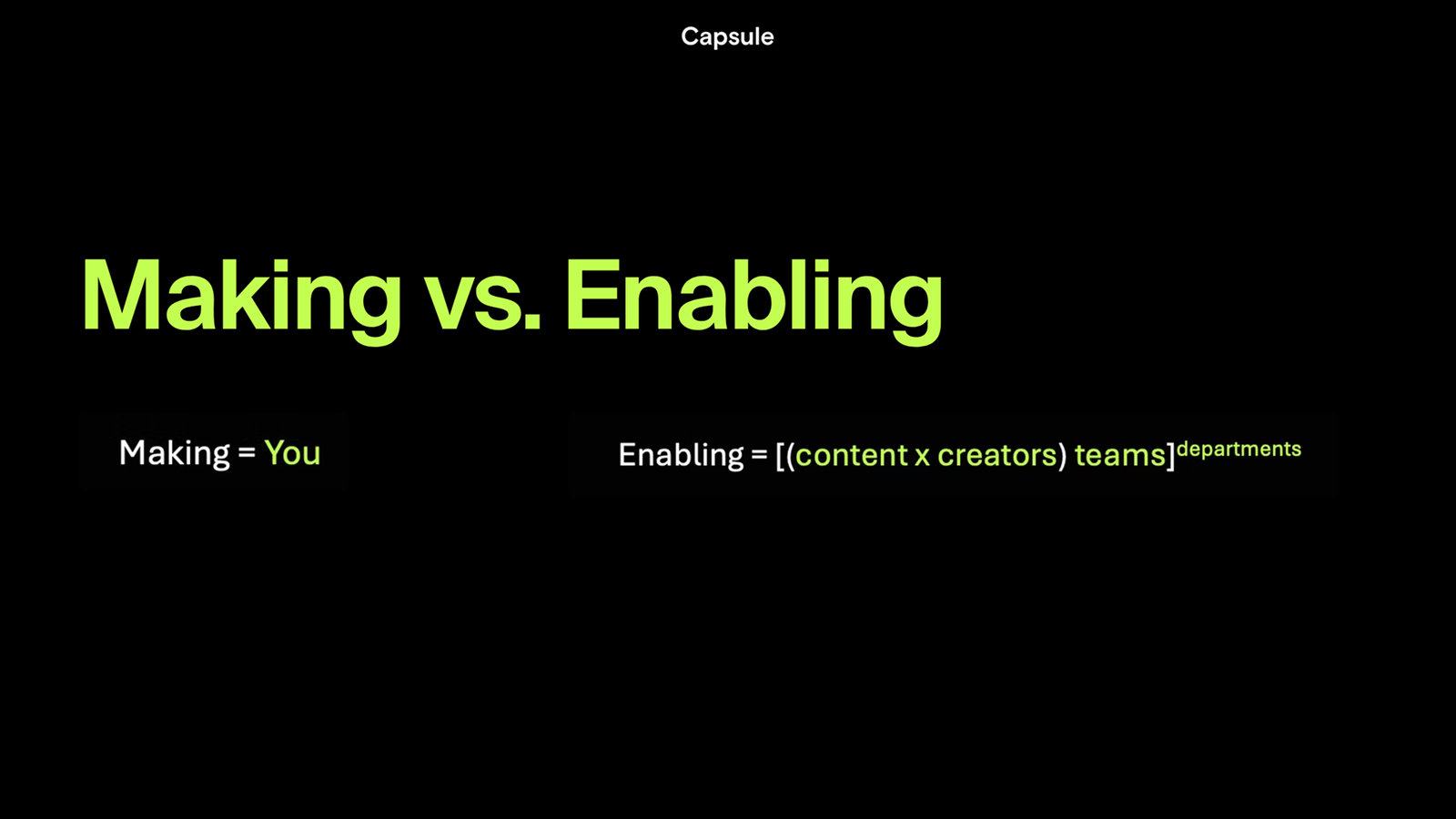
This was the through-line of the whole conversation. Making = you. Enabling = everyone else in the organization, creating inside a system you built.
At Ceridian, Andrei's team went from producing 120 videos a year internally to a peak of 11,300—not by hiring more people, but by building the playing field and letting the rest of the org play within it.
The PMM who owns the product messaging—why can't they make a video? The sales rep who knows exactly what lands with a specific customer—why can't they? The creative team's job is to make sure that when they do, it looks and sounds like the brand.
Start with what your audiences are already telling you, not with what you want to make.
When organizations get excited about video, they want to do everything. Andrei's first question is always “What content is already resonating?”
If your best-performing written content is deeply technical, start with demo videos. If case studies are connecting, go down the customer story route. The signals are already there in a different format. Video teams just need to look for them.
And when it comes to actually getting started: make the minimum viable version, put it out, see what happens. Most video today is Honda Civic territory. Save the Ferrari for your big brand moments. A video that doesn't perform is just a data point, not necessarily a disaster.
"You can't pay the rent with passion. You can't pay your department's expenses with likes."
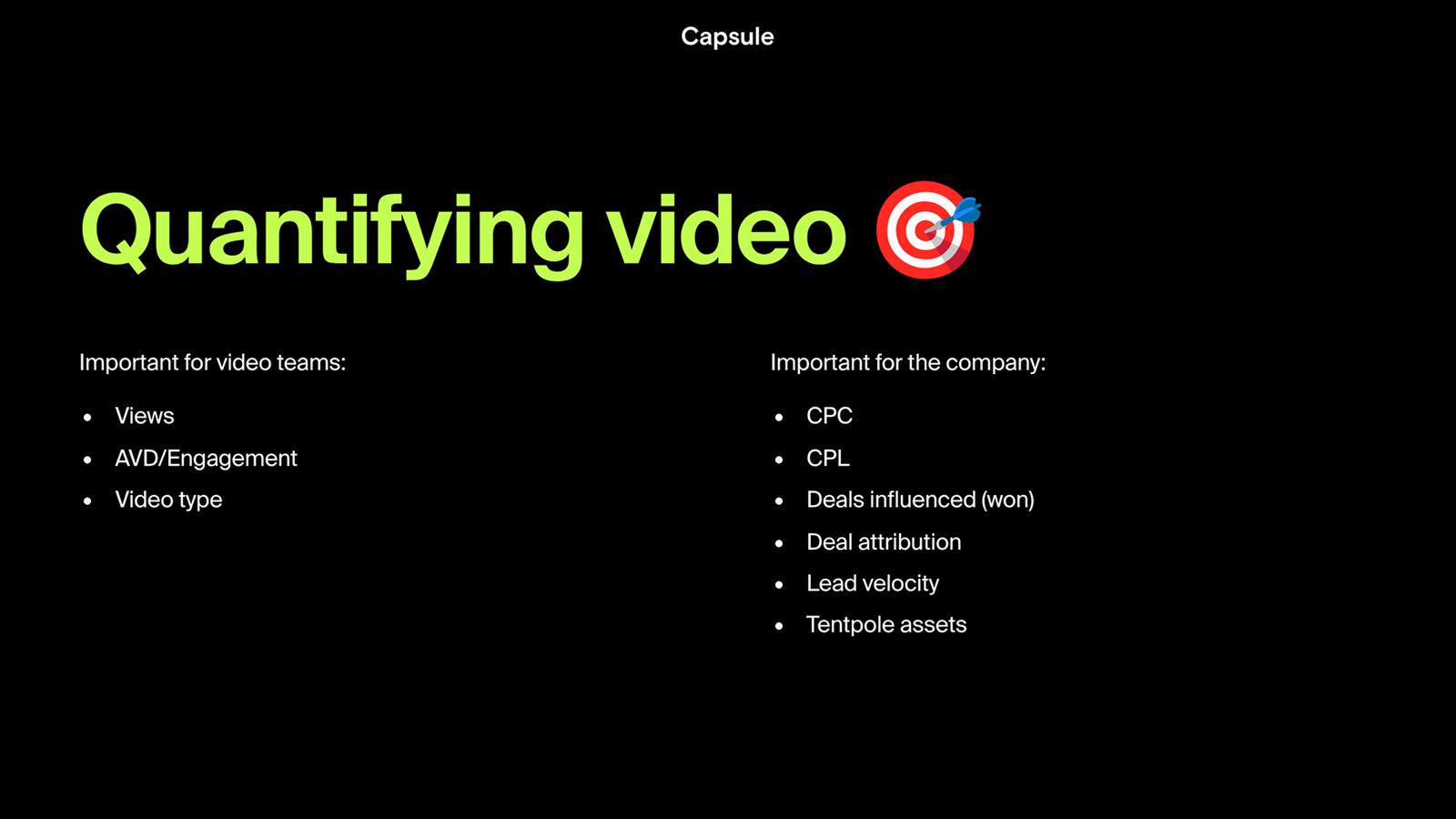
Andrei told a story about bombing his first QBR at Ceridian. The room was full of people talking about pipeline, CPL, and CAC. When he got up, he talked about likes and views.
That meeting was the moment he realized creative leaders have to learn to speak the language of the business. His mindset shifted to “I'll teach the marketers good video; and the marketers will teach me good marketing.”
The creative teams that earn budget and influence are the ones that can connect what they're making to deals influenced, lead velocity, and revenue (not just engagement).
The three things that actually break video at scale
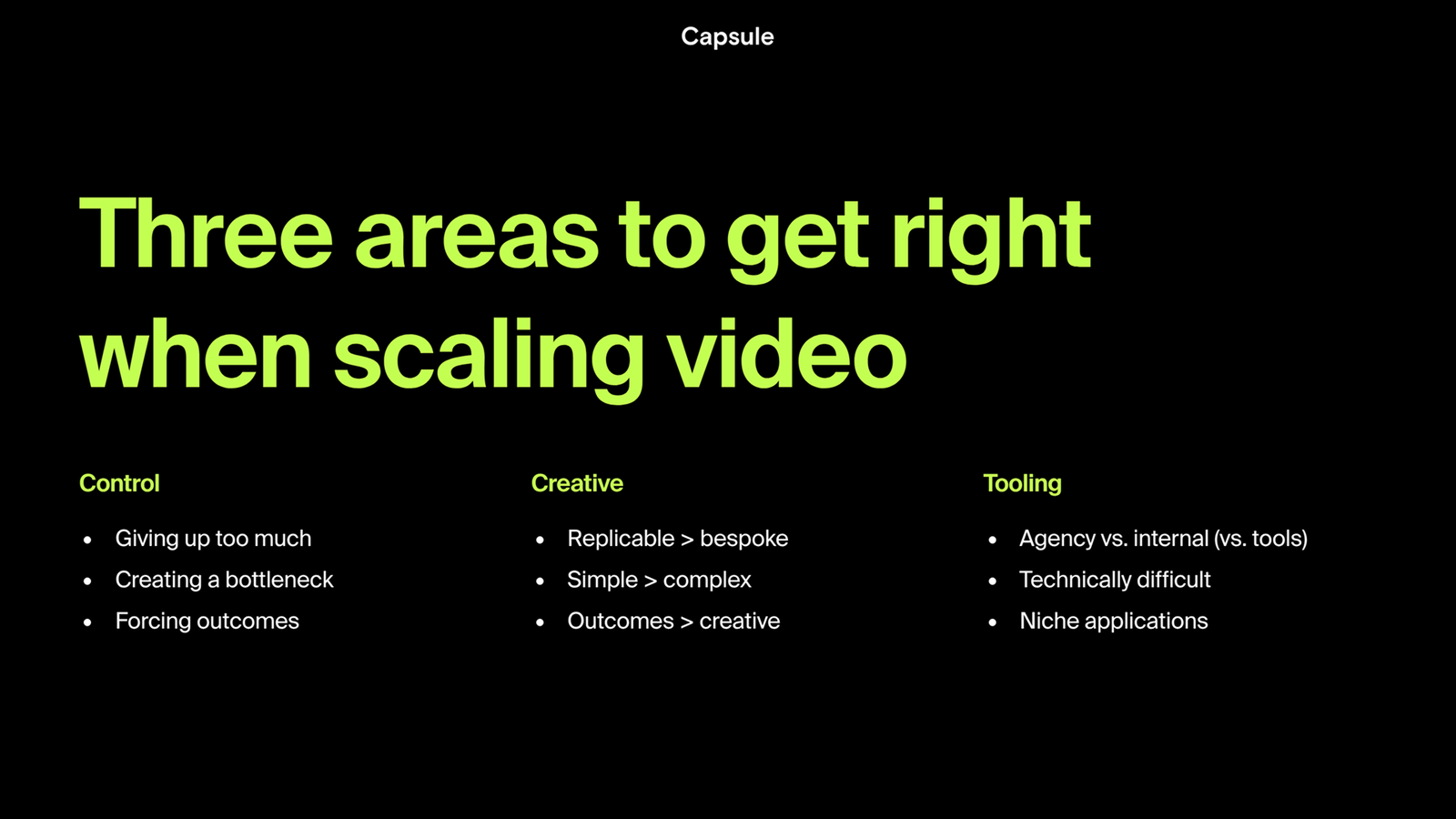
Control, creative, and tooling. Giving up too much control creates brand chaos. Holding on too tight creates a bottleneck. And the tools have to be right for the job—not what your team uses, but what the teams you're enabling can actually use without you.
If you’re interested in tools that can help enable the rest of your org to create on-brand video, we’d love to hear from you.